Research

My work is in public and labor economics. I study the intergenerational transmission of inequality, how information shapes fairness views and support for redistribution, and how institutions shape occupational choice.

Job Market Paper

Service Shapes Careers: Conscription and Occupational Choice

This paper examines how exposure to specific occupations at a formative moment affects individuals’ subsequent occupational choice. I leverage the 2011 abolition of German military service and its social service equivalent to estimate this effect, using a difference-in-discontinuities design based on school entry cutoffs. Graduating in time to be exposed to military or social service increases young men’s likelihood of working in occupations related to the social alternative service, particularly social work, and in occupations with a higher female share. Broad tertiary educational outcomes are not significantly affected, nor are wages and working days at age 28.

Draft available upon request.
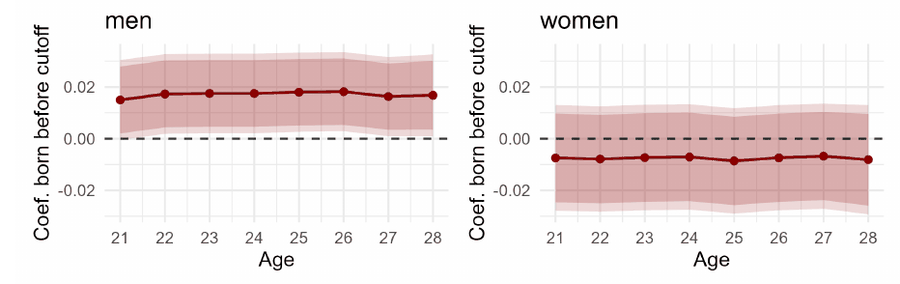
Difference-in-discontinuities coefficients on entering a social-service-related occupation, by age, shown separately for men and women
Effect of conscription abolition on probability of ever entering a service-related occupation, by age and gender.

Working Papers

Rising Inequality, Declining Mobility: The Evolution of Intergenerational Mobility in Germany

with Moritz Bode and Andreas Peichl

R&R Journal of Public Economics · CESifo Working Paper No. 12058

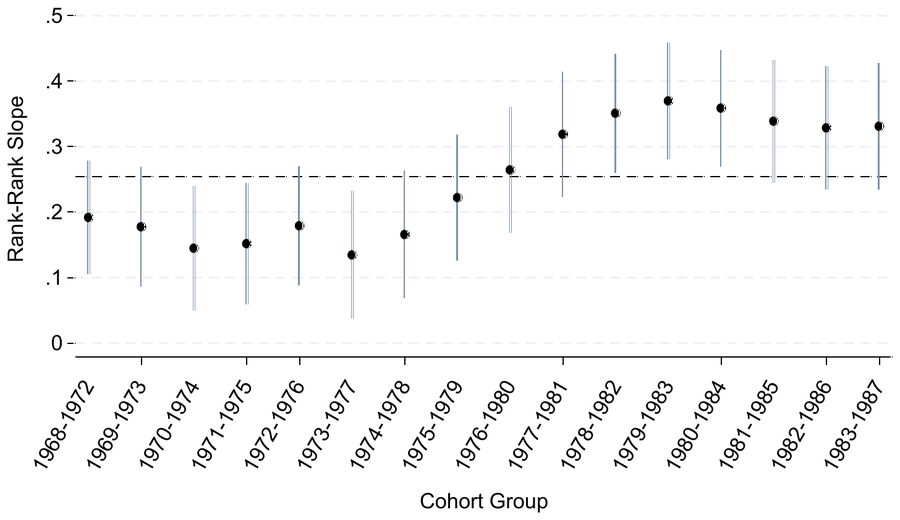
We provide the first evidence that intergenerational income mobility in Germany has declined over time. Estimating intergenerational persistence for the birth cohorts 1968–1987, we document that the rank-rank slope rises sharply for cohorts born in the late 1970s and early 1980s and then stabilises at a higher level; depending on the specification, the slope increases by 59% to 107%. As a step towards understanding the mechanisms behind this rise, we show that parental income has become considerably more important for children’s educational outcomes over the same period. The increase in income persistence coincided with rising cross-sectional income inequality, providing novel evidence for an “Intertemporal Great Gatsby Curve” in Germany.

Media Die Zeit tagesschau ZDF heute NZZ

Rank-rank slope estimates rising across birth cohort groups from 1968 to 1987
Rank-rank slope by birth cohort group.

How Does Information about Inequalities Affect Fairness Views and Policy Preferences?

with Mathias Dolls and Lisa Windsteiger

R&R Journal of Economic Behavior and Organization · CESifo Working Paper No. 12234

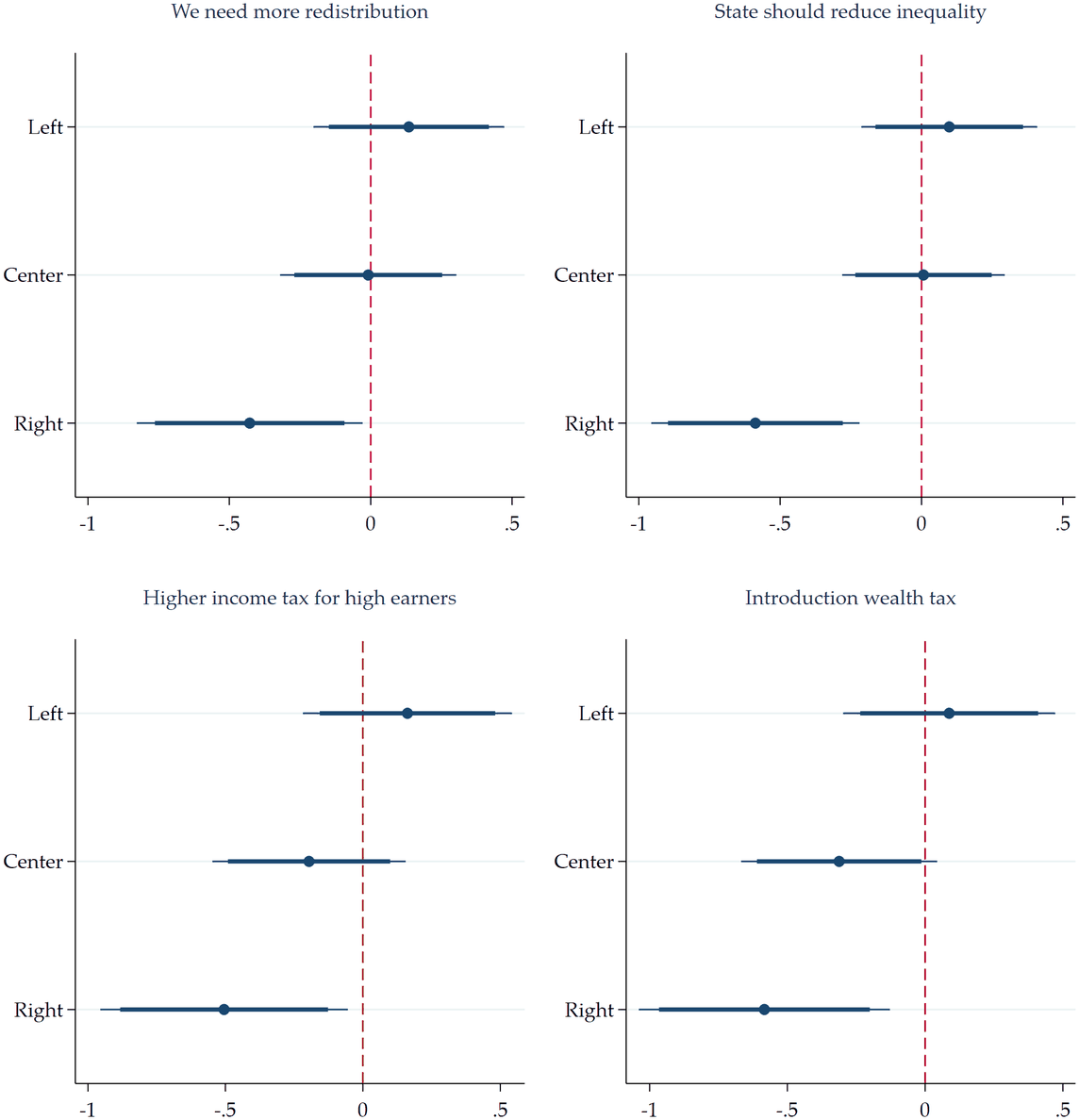
We study how information about inequality shapes fairness perceptions and policy preferences in a large-scale randomized survey experiment with 4,900 respondents in Germany. Respondents generally underestimate existing wealth and age disparities. Providing accurate information about their extent has little effect on left-leaning and centrist respondents, but elicits a backlash among right-leaning ones: it raises their perceived fairness of the status quo and lowers their support for redistributive and future-oriented policies.

Media Handelsblatt

Four coefficient plots showing treatment effects on policy preferences for left, center and right-leaning respondents
Treatment effects on policy preferences, by political leaning.

Work in Progress

Manager Preferences and Corporate Decisions

with Fabian Kosse, Andreas Peichl, Uwe Sunde and Klaus Wohlrabe

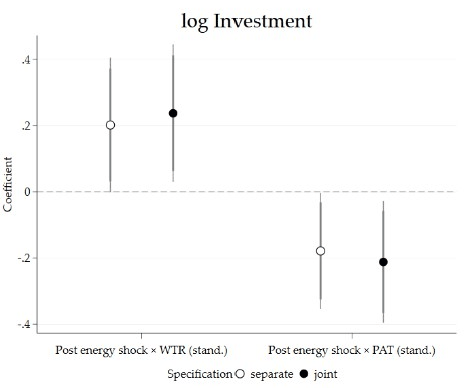
We study how top managers’ risk and time preferences relate to, and potentially shape, firm behavior. Using a unique survey of more than 2,000 German top executives and based on validated preference measures, we show that managers’ willingness to take risks and patience predict firms’ investment decisions and R&D activities. Exploiting the 2022 energy-price shock, we document that high-energy-intensity firms with managers who are more willing to take risks expand investment and R&D activities, while firms with managers who are more patient cut back. This suggests that preferences of managers systematically influence corporate decisions, highlighting their role as fundamental determinants of firm dynamics and resilience.

Draft available upon request.

Coefficient plot of log investment on the interaction of the post-energy-shock period with managers' willingness to take risks and with patience
After the 2022 energy-price shock, firms with managers more willing to take risks expanded investment, while those with more patient managers cut back.

Intergenerational Mobility in Germany: Evidence from Secondary-Track Choices

with Michaela Paffenholz

Poverty Levels and Trends: Comparing France and Germany with a Nested Decomposition of the FGTs

with Edwin Fourrier-Nicolaï, David Gstrein and Alain Trannoy

The Difference in Plain Sight: Spatial Patterns of Income Inequality Factors across Germany and Italy

with Oana Garbasevschi, Paolo Brunori, Emanuele Fedeli, Andreas Peichl, Jürgen Rauh, Giovanna Scarchilli, Hannes Taubenböck, Moris Triventi, Paul Schüle and Michael Wurm

Publications

Learning Income Levels and Inequality from Spatial and Sociodemographic Data in Germany

with Oana Garbasevschi, Hannes Taubenböck, Paul Schüle, Paul Hufe, Michael Wurm and Andreas Peichl

Applied Geography, 2023, 159, 103058

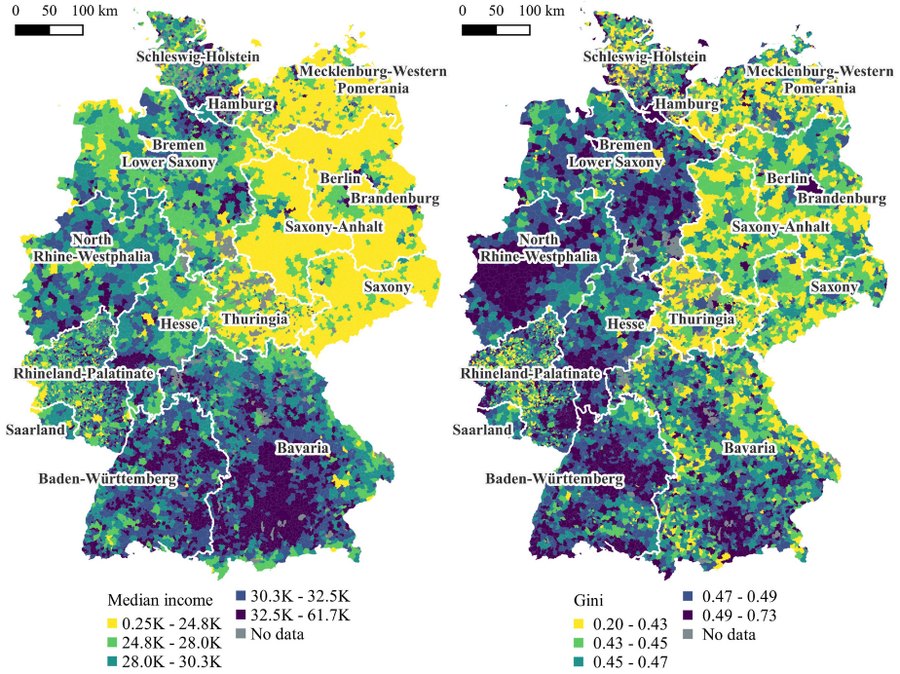
We explore the potential of predicting income levels and income inequality from attributes of the built, natural and social environment in Germany, and investigate how explanatory power differs across municipalities with distinct social and spatial profiles. Combining income tax data, the 2011 Census and spatial data from various sources, our models explain 54% of the variation in inequality and 73% of the variation in median income for a sample of municipalities covering 97% of the country’s population — rising to 63% and 80% respectively for municipalities with at least 10,000 inhabitants. Inequality and top incomes are better identified in western, urban and central locations, while median income is estimated most accurately in eastern, rural and peripheral ones.

Two maps of German municipalities, one shaded by median income and one by the Gini coefficient
Median income and Gini across German municipalities.

Loneliness in Europe before and during the COVID-19 pandemic

with Béatrice d’Hombres and Guido Tintori

Health Policy, 2022, 126 (11), 1124–1129

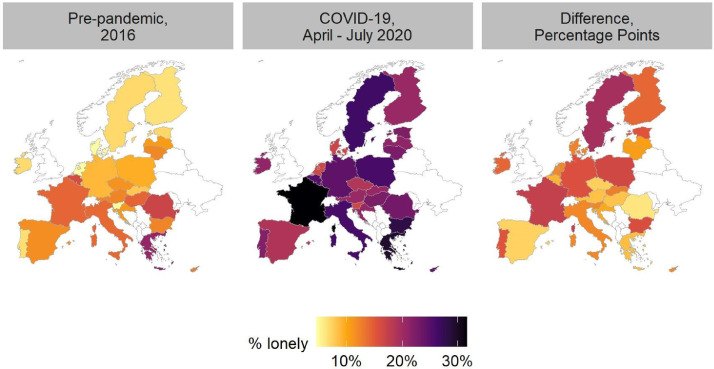
We examine the prevalence of loneliness in Europe in 2016 and during the first months of the COVID-19 pandemic (April–July 2020), and assess whether the risk factors associated with loneliness changed after the outbreak. While around 12% of people in the European Union reported frequent feelings of loneliness in 2016, this share rose to 25% in the early months of the pandemic. Young adults were the most severely affected by social distancing measures, and living alone made those measures considerably more painful.

Three maps of Europe showing the share of people reporting loneliness in 2016, during COVID-19, and the difference
Loneliness across the EU before and during the pandemic.

Policy Work

  • Pro-environmental behaviour in Europe: A comparison across individuals, countries and time with Milena Büchs and Sylke Schnepf · European Commission, Ispra, 2026 · JRC145488
  • Gerechtigkeitsempfinden in Deutschland with Mathias Dolls, Kai Unzicker and Lisa Windsteiger · Bertelsmann Report, 2022 · doi:10.11586/2022129 Media Handelsblatt
  • The Relationship between Loneliness and Health with Matija Kovacic · Publications Office of the European Union, 2022 · doi:10.2760/90915
  • Loneliness in the EU: Insights from surveys and online media data with Alexandra Balahur-Dobrescu, Laura Cassio, Béatrice d’Hombres, Zsuzsanna Pasztor and Guido Tintori · Publications Office of the European Union, 2021 · doi:10.2760/46553 Media Deutsches Ärzteblatt evangelisch.de EU Reporter